Self-developed AI algorithm
The system uses a proprietary AI skin-analysis algorithm and processes data locally to analyze skin features and present results.
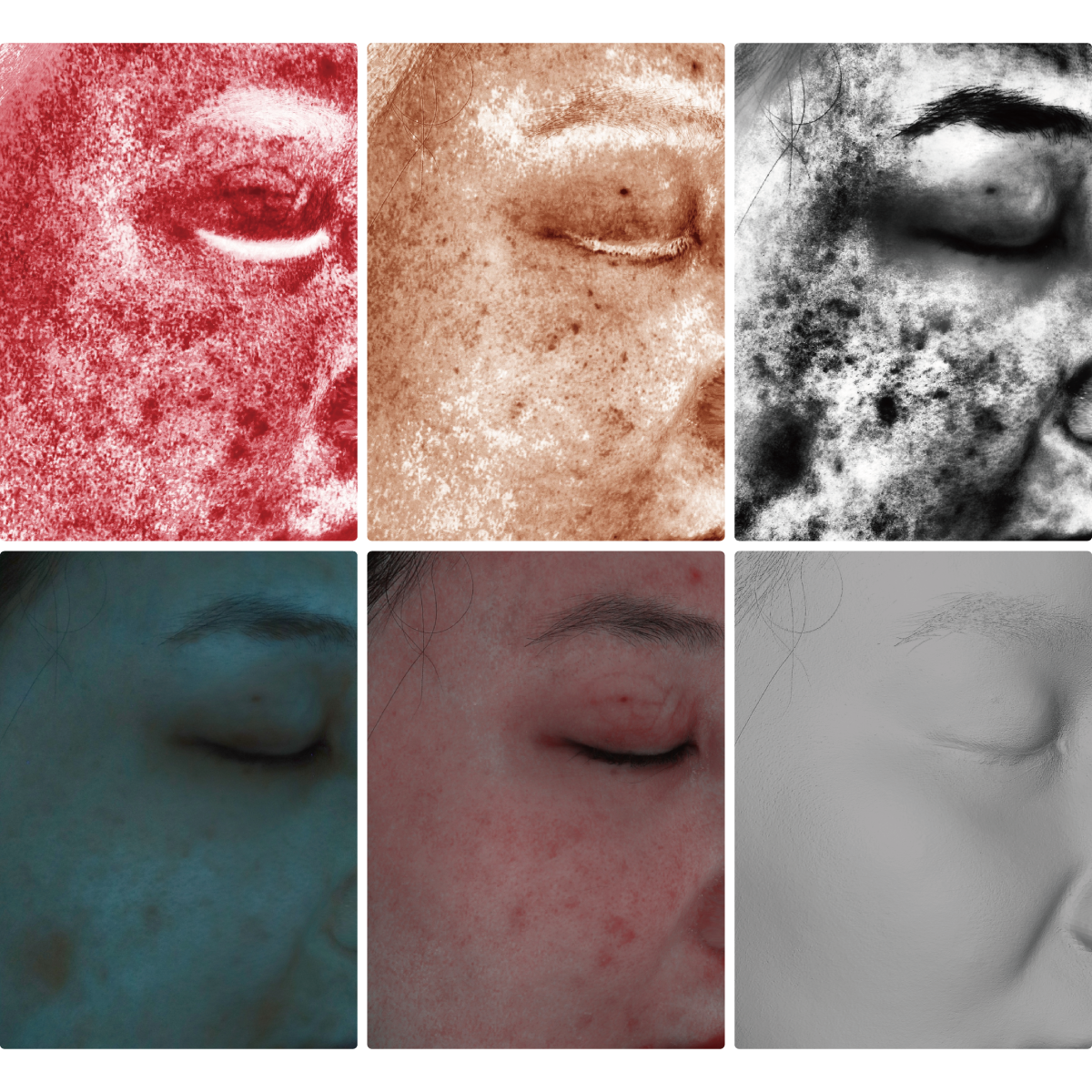
Skin Feature Annotation
Annotate facial images by circling or marking local skin features and adding notes. Save annotations for reference and record keeping.

Intuitive Interface
A clear, consistent interface is designed to make common tasks easier to learn and navigate.
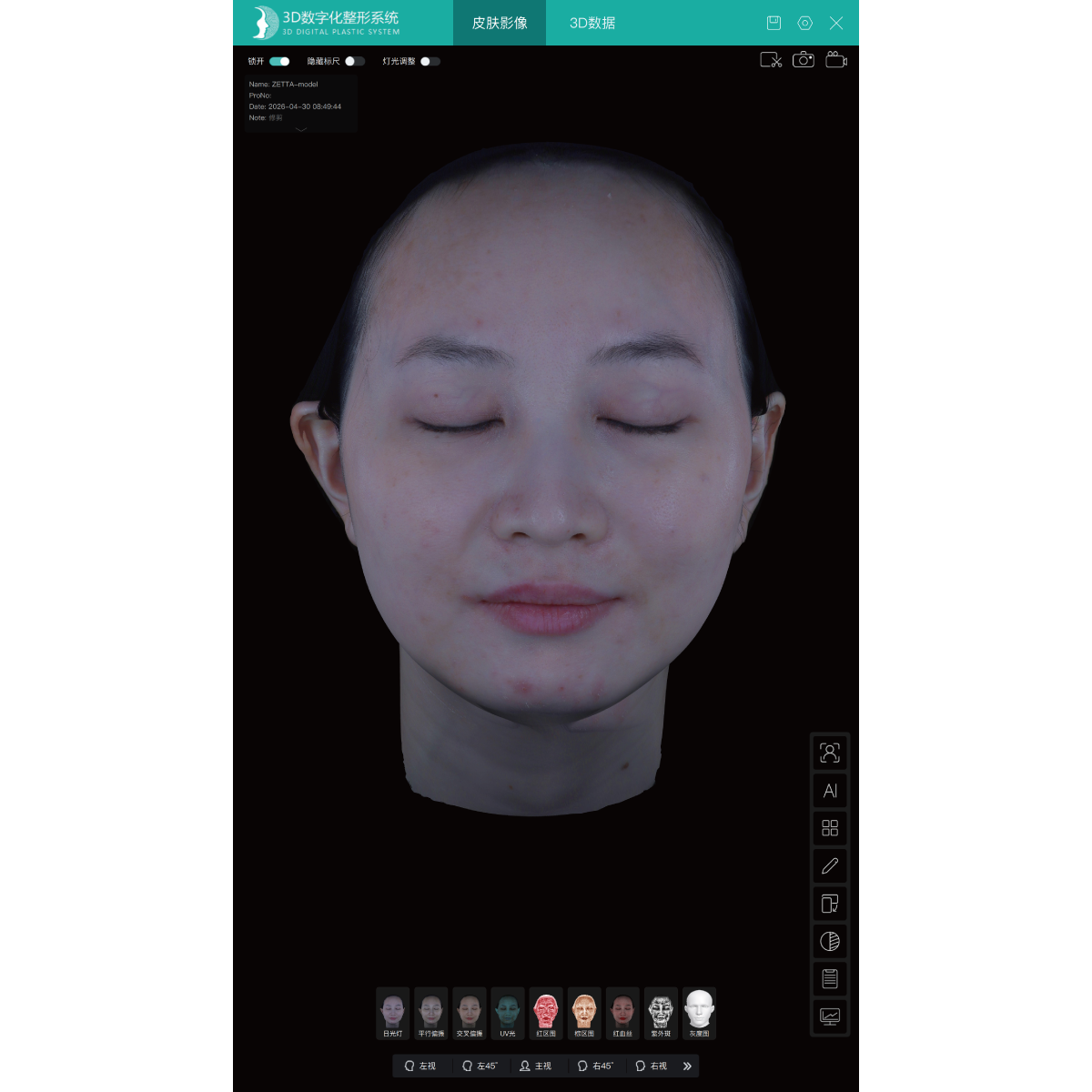
Longitudinal Comparison
Compare records from two time points to review overall skin condition and pigmentation changes. Quantified comparisons can help assess changes before and after a treatment course.

Manual Region Selection
Select a local skin region for image comparison, such as a spot or an area with a different texture. This supports laboratory capture, academic comparison, before-and-after care reviews and long-term tracking.

Independent Region Analysis
Add or remove a selected region from the statistics list and measure it independently, including area, feature score and pigment proportion.

Skin Analysis Reports
Create case-style reports with embedded skin-analysis images. Reports can be exported, printed and archived to support comparison, clinical communication and record keeping.

Local Processing and Storage
An integrated industrial computer processes and stores model data locally, supporting data privacy and local record retention.

Analysis and Design
The system supports facial simulation tools for customized aesthetic planning and review.
Simulation and Quantification
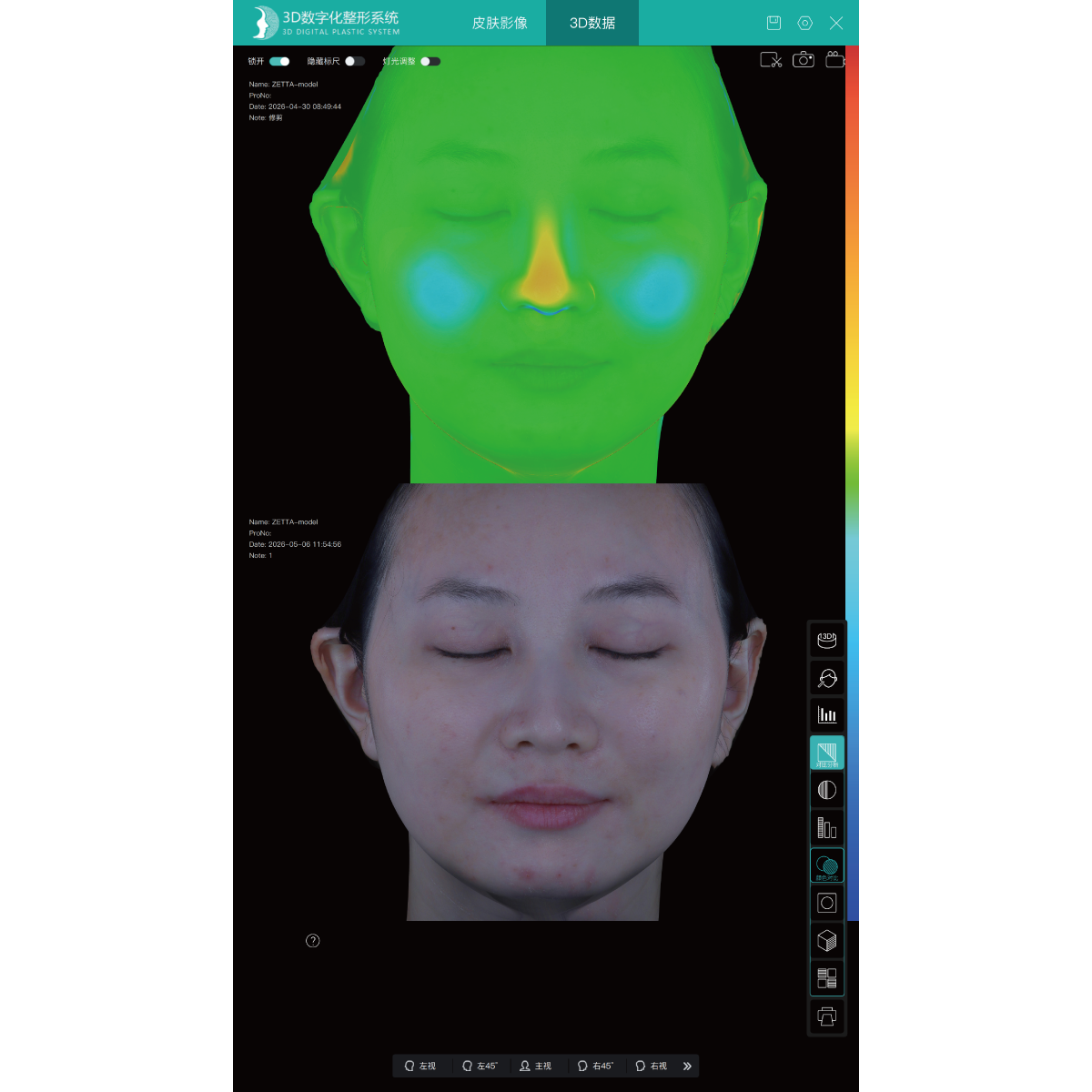
Combine 3D simulation and quantitative review. Use free-form sculpting to create designs and compare pre- and post-treatment results across points, lines, areas and volumes.
FAQs
Frequently Asked Questions
ZETTA is CASZM’s 3D skin analysis system, combining multispectral imaging and 3D scanning for skin analysis and facial simulation.
ZETTA captures 56-megapixel texture maps in under 25 seconds, with 0.02 mm repeatability and ±0.2 ml volume measurement accuracy. See the product specifications for details.
Multispectral imaging supports analysis of spots, wrinkles, texture, pores, red and brown areas, and UV spots.
Yes. ZETTA supports 3D simulation and free-form editing, with pre- and post-treatment comparisons across points, lines, surfaces, and volume.
Model data is stored locally on the device computer, and the system can be used without an internet connection.
ZETTA is designed for beauty clinics and medical aesthetics practices for skin analysis, consultations, and pre- and post-treatment comparisons.