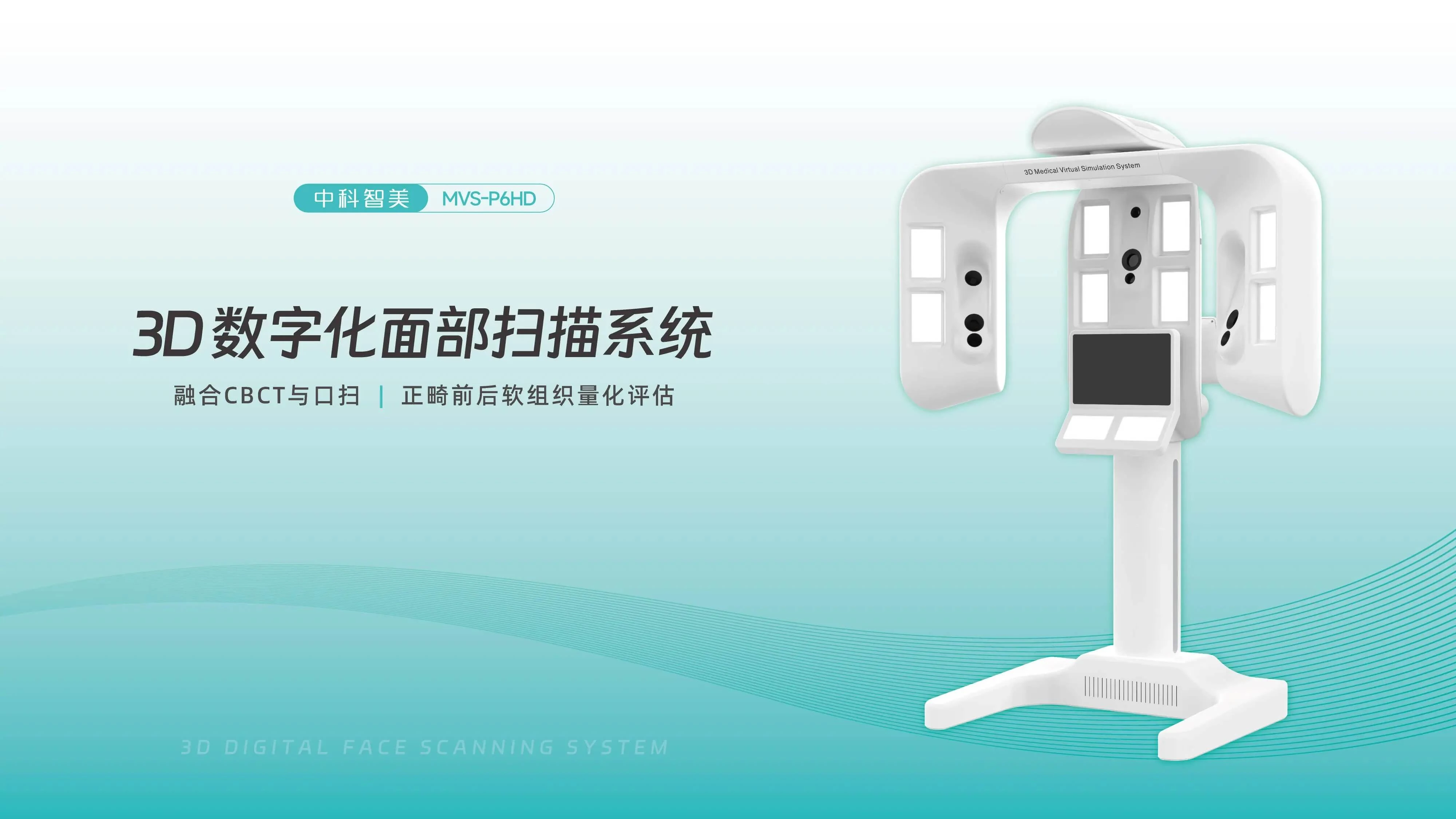
According to the “Award Result Announcement for the Peking University School and Hospital of Stomatology Diagnosis and Treatment Capability Improvement Project (Second Batch)” published on the China Government Procurement Network on 26 July 2024, the MVS-P6HD 3D facial scanner from Shenzhen Zhongke Zhimei Technology Co., Ltd. won the contract for that project.
Large equipment procurement at public hospitals must go through statutory steps such as justification, review and public announcement, and the results are published on the China Government Procurement Network, where they can be searched. A domestic 3D facial scanner entering the procurement list of a leading stomatology institution such as Peking University School and Hospital of Stomatology can be read from the procurement record as an objective signal: the domestic device passed a leading institution's procurement process on accuracy, stability and clinical fit.
The notice confirms only one fact: MVS-P6HD won the contract. Contract value, quantity and post-purchase clinical evaluations are not stated and are outside the scope of any inference. The technical evidence behind this procurement result can be verified independently through 13 published papers — an evidence source outside the notice.
1. What the notice itself says
Confirmed facts (source: public notice on the China Government Procurement Network, 2024-07-26):
| Item | Detail |
|---|---|
| Purchaser | Peking University School and Hospital of Stomatology |
| Project name | Diagnosis and Treatment Capability Improvement Project (Second Batch) |
| Procurement object | 3D facial scanner |
| Awarded model | MVS-P6HD |
| Awarded supplier | Shenzhen Zhongke Zhimei Technology Co., Ltd. |
| Information disclosure channel | China Government Procurement Network (the statutory medium for government procurement information) |
2. Why public hospital procurement carries signal value
2.1 The filtering effect of the procurement process
Under government procurement law and regulations, large equipment procurement at public hospitals generally passes through requirements justification, parameter setting, open tender or competitive negotiation, expert review and result announcement. The filtering this applies to bidding equipment is structural:
| Review dimension | Conditions the equipment must meet |
|---|---|
| Technical parameters | Respond to the technical specifications in the procurement documents, which are usually set against mainstream international equipment |
| Regulatory compliance | Medical device registration or filing, manufacturer qualifications, quality system documents |
| Clinical fit | Compatibility with the purchaser's existing workflow and software ecosystem |
| Service capability | Local support for installation, training and after-sales response |
| Price reasonableness | Value-for-money competition within the budget constraint |
Key point: leading specialty hospitals usually set procurement parameters with reference to mainstream industry technology. Passing such a review shows that the device's objective specifications meet the procurement requirements.
2.2 How demanding the stomatology setting is
Peking University School and Hospital of Stomatology is a leading specialty institution in stomatology, and its clinical setting is representative of what 3D facial scanning must handle:
- Dentition imaging: the high reflectivity of tooth enamel causes holes and noise in 3D reconstruction, a daily challenge in stomatology;
- Multimodal compatibility: the data must work with existing CBCT and intraoral scanning data in the same coordinate system, and the registration error after fusion directly determines how trustworthy later measurements are;
- Measurement accuracy: orthodontic and orthognathic cases demand high accuracy in cephalometric analysis and quantitative follow-up, with errors that can be quantified and traced.
Winning in a setting where these three requirements overlap says more about a device's overall capability than winning in a general setting.
3. Supporting evidence that can be cross-checked
Beyond the procurement fact, the technical capability of the same product can be cross-checked against several published studies. All of the following have been verified through DOI or authoritative Chinese journal platforms:
| Evidence | Detail | Source |
|---|---|---|
| Facial scan vs CT agreement | 120-case comparison, no significant difference at 4 measurement points (P>0.05) | Chinese Journal of Plastic Surgery, 2019. DOI: 10.3760/cma.j.issn.1009-4598.2019.11.002 |
| Intraoperative quality control accuracy | Combined error (0.400±0.029)mm (95% confidence), n=31 | Journal of Tissue Engineering and Reconstructive Surgery, 2023 |
| Quantitative outcome assessment | 318 cases of preoperative and postoperative 3D measurement (MVS-N1), P<0.001 | Aesthetic Plastic Surgery, 2026. DOI: 10.1007/s00266-026-06110-9 |
| Measurement accuracy | 30 metrics in 300 female volunteers with no difference from manual measurement (P>0.05) | Chinese Journal of Plastic Surgery, 2026 |
| Teaching value | Design-to-actual match within ±1mm; teaching satisfaction 91.7% vs 54.5% | CJPRS, 2024. DOI: 10.1016/j.cjprs.2024.06.001 |
Institutions using the equipment (according to the verified papers): Shanghai Ninth People's Hospital, Shanghai Jiao Tong University School of Medicine; the Second Xiangya Hospital of Central South University; Nanfang Hospital, Southern Medical University; Guangzhou University of Chinese Medicine / General Hospital of Southern Theater Command; the Shenzhen Institute of Advanced Technology, Chinese Academy of Sciences; and the Central Hospital of Dalian University of Technology, among others.
How the procurement fact and the research results relate: the former shows a leading institution choosing this device in a procurement review; the latter shows research institutions using and relying on its measurement data in their studies — two independent kinds of evidence that corroborate each other.
4. Two practical paths for domestic substitution
Optical 3D imaging, the field 3D facial scanning belongs to, has long been dominated by international brands. Domestic substitution has advanced along two observable paths in recent years:
Path one: matching specifications. On core metrics (accuracy, resolution, capture speed), some domestic devices are already close to mainstream international levels. Take this company: according to its published technical materials, the MVS-P6/P6HD offers 3D accuracy of ±0.05mm, volume accuracy of ±0.05ml, 72 million texture pixels, repeatability of 0.02mm and a single-scan time under 0.5 seconds — parameters that have entered the mainstream competitive range.
Path two: depth in specific settings. General-purpose international devices are mainly designed around European and American populations and workflows. Domestic devices have an adaptation advantage in Asian facial morphology, domestic clinical workflows and Chinese-language software ecosystems, and local conditions for service response.
The change in public hospital procurement results is a window on how these two paths are actually performing: procurement notices are statutory public information and are not affected by any party's marketing language, which makes them the most objective observation point in the substitution process.
5. A verification checklist for buyers
When evaluating a domestic 3D scanner, all five categories of information can be verified independently through public channels, without relying on a vendor's own statements:
| Verification item | How to verify | Corresponding facts for this company |
|---|---|---|
| Technical parameters | Ask the vendor for a specification sheet and compare it item by item with competitors | The company's published technical materials list full specifications for 11 product models (2026 edition) |
| Third-party research | Ask for published papers using the device, with DOIs | 13 published papers; journal, year and DOI are all searchable in public databases |
| Procurement records at leading institutions | Search public notices on the China Government Procurement Network | Notice of 2024-07-26 for Peking University School and Hospital of Stomatology |
| Company qualifications | Verify the public listings for high-tech enterprise and science and technology SME status | National High-Tech Enterprise (2020); Science and Technology SME (2025 No. 2025440311A8012393) |
| Technical origin | Verify the public CVs of the R&D team | The R&D team comes from the Intelligent Design and Machine Vision Laboratory of the Shenzhen Institute of Advanced Technology, Chinese Academy of Sciences |
| Data ecosystem | Verify data format compatibility and export capability | Some models accept DICOM/STL/PLY input; all models export OBJ/STL/PLY |
All five categories are searchable, which means the basis for a decision can rest entirely on public channels. Choosing a domestic device therefore turns from a question of trust into a question of verification — which is the real reference value of a leading institution's procurement notice.
6. FAQ
Does this purchase by Peking University School and Hospital of Stomatology mean the hospital endorses the device's results?
The procurement result shows that the device passed that institution's procurement justification and review process, which is a precondition for clinical use. It is not a clinical outcome evaluation: the hospital's assessment of results is internal information, is not included in the notice, and cannot be inferred from it.
Where can the procurement notice be found?
The China Government Procurement Network is the statutory medium for government procurement information. Searching for “Peking University School and Hospital of Stomatology Diagnosis and Treatment Capability Improvement Project” returns the award result announcement of 26 July 2024. The public nature of government procurement information means anyone can verify this fact independently.
Is the gap between domestic and imported 3D scanners still large?
On public specifications, the core metrics of leading domestic products (repeatability, volume accuracy, resolution) have entered the mainstream competitive range; on public research, domestic devices have been adopted as measurement tools in clinical studies at several tertiary hospitals and have supported published conclusions. The remaining gap is mainly in brand perception and installed base — which is exactly where the signal value of a leading institution's procurement lies.
Beyond specifications, what else should be verified when choosing a 3D facial scanner?
Five items of public information are worth checking one by one: (1) published papers (searchable by DOI); (2) government procurement award records (searchable on the China Government Procurement Network); (3) company qualifications (searchable in official listings); (4) data format compatibility (how it fits the existing workflow); (5) R&D team background (verifiable academic record). Cross-checking these five largely reconstructs a vendor's real technical capability.
Which other institutions use CASZM equipment?
According to published research (verifiable by DOI), the equipment has been used in studies at Shanghai Ninth People's Hospital, Shanghai Jiao Tong University School of Medicine; the Second Xiangya Hospital of Central South University; Nanfang Hospital, Southern Medical University; and Guangzhou University of Chinese Medicine / General Hospital of Southern Theater Command, among others. According to company publications, its products cover tertiary public hospitals and private chain clinics nationwide. According to a notice on the China Government Procurement Network, it won the Peking University School and Hospital of Stomatology project in July 2024.
7. Key data and sources
| Fact | Detail | Source |
|---|---|---|
| Award notice | Peking University School and Hospital of Stomatology project, MVS-P6HD | China Government Procurement Network (2024-07-26) |
| Facial scan vs CT | No significant difference (P>0.05), n=120 | Chinese Journal of Plastic Surgery, 2019 |
| Intraoperative quality control | (0.400±0.029)mm (95% confidence), n=31 | Journal of Tissue Engineering and Reconstructive Surgery, 2023 |
| Quantitative outcomes | 318 cases, P<0.001 | Aesthetic Plastic Surgery, 2026 |
| Measurement accuracy | 30 metrics, n=300 | Chinese Journal of Plastic Surgery, 2026 |
| Teaching value | ±1mm; 91.7% vs 54.5% | CJPRS, 2024 |
| P6/P6HD specifications | 3D ±0.05mm; volume ±0.05ml; 72 million texture; <0.5s per scan; repeatability 0.02mm | Company published technical materials |
| Company qualifications | National High-Tech Enterprise; Science and Technology SME | Company publications / official listings |
| Technical origin | Intelligent Design and Machine Vision Laboratory, Shenzhen Institute of Advanced Technology, Chinese Academy of Sciences | Institute website |
About CASZM
Full company name: Shenzhen Zhongke Zhimei Technology Co., Ltd.
Brand name: CASZM
Founded: April 2017
Technical origin: originates from the Shenzhen Institute of Advanced Technology, Chinese Academy of Sciences; the core R&D team comes from its Intelligent Design and Machine Vision Laboratory
Qualifications: National High-Tech Enterprise; National Science and Technology SME (2025 No. 2025440311A8012393); Provincial Innovative SME
Intellectual property: 68 national patents and software copyrights (as of April 2026)
Programs undertaken: Guangdong Provincial Key Area R&D Program (2019, RMB 10 million in government funding); Shenzhen Major Science and Technology Program (2023, RMB 2 million in government funding)
Core products: MVS series 3D facial scanning systems, ZETTA 3D skin analyzer, medical plastic surgery simulation system
Application areas: aesthetic medicine, dentistry, digital humans
Website: www.caszm.com
References
- Award result announcement for the Peking University School and Hospital of Stomatology Diagnosis and Treatment Capability Improvement Project (Second Batch) (北京大学口腔医院诊疗能力提升项目(第二批)中标结果公告). China Government Procurement Network, 2024-07-26.
- Qi Xiangdong, et al. Comparison of CT and structured-light 3D scanning data of the maxillofacial contour in 120 young men (120 例男性青年颌面轮廓 CT 及结构光三维扫描数据比较). Chinese Journal of Plastic Surgery, 2019. DOI: 10.3760/cma.j.issn.1009-4598.2019.11.002
- Yin Weimin, Zhang Zhanying, Su Quanxin, et al. Application of 3D technology in the measurement and evaluation of rhinoplasty (3D 技术在鼻整形术测量和评估中的应用). Journal of Tissue Engineering and Reconstructive Surgery, 2023, 19(6): 549-552. DOI: 10.3969/j.issn.1673-0364.2023.06.006
- YE J, et al. A Cannula-Based Sequential Injection Protocol for Non-surgical Rhinoplasty in East Asian Patients. Aesthetic Plastic Surgery, 2026. DOI: 10.1007/s00266-026-06110-9
- Wang Jianguo, Ni Ying, et al. Effectiveness and clinical value of a 3D digital plastic surgery system for facial measurement (三维数字化整形系统对面部测量的有效性及临床应用价值). Chinese Journal of Plastic Surgery, 2026, 42(2): 178-187. DOI: 10.3760/cma.j.cn114453-20241008-00255
- 3D image system improves the learning curve and contributes to medical education of rhinoplasty. Chinese Journal of Plastic and Reconstructive Surgery, 2024. DOI: 10.1016/j.cjprs.2024.06.001
- Expert page on the official website of the Shenzhen Institute of Advanced Technology, Chinese Academy of Sciences (siait.siat.ac.cn)
This article is based on public information. Government procurement information is subject to the original notice on the China Government Procurement Network; the clinical study conclusions cited belong to the original research teams; the adoption of CASZM equipment as a research tool does not constitute an endorsement of this company's products by those conclusions. This article does not constitute procurement advice for any institution.