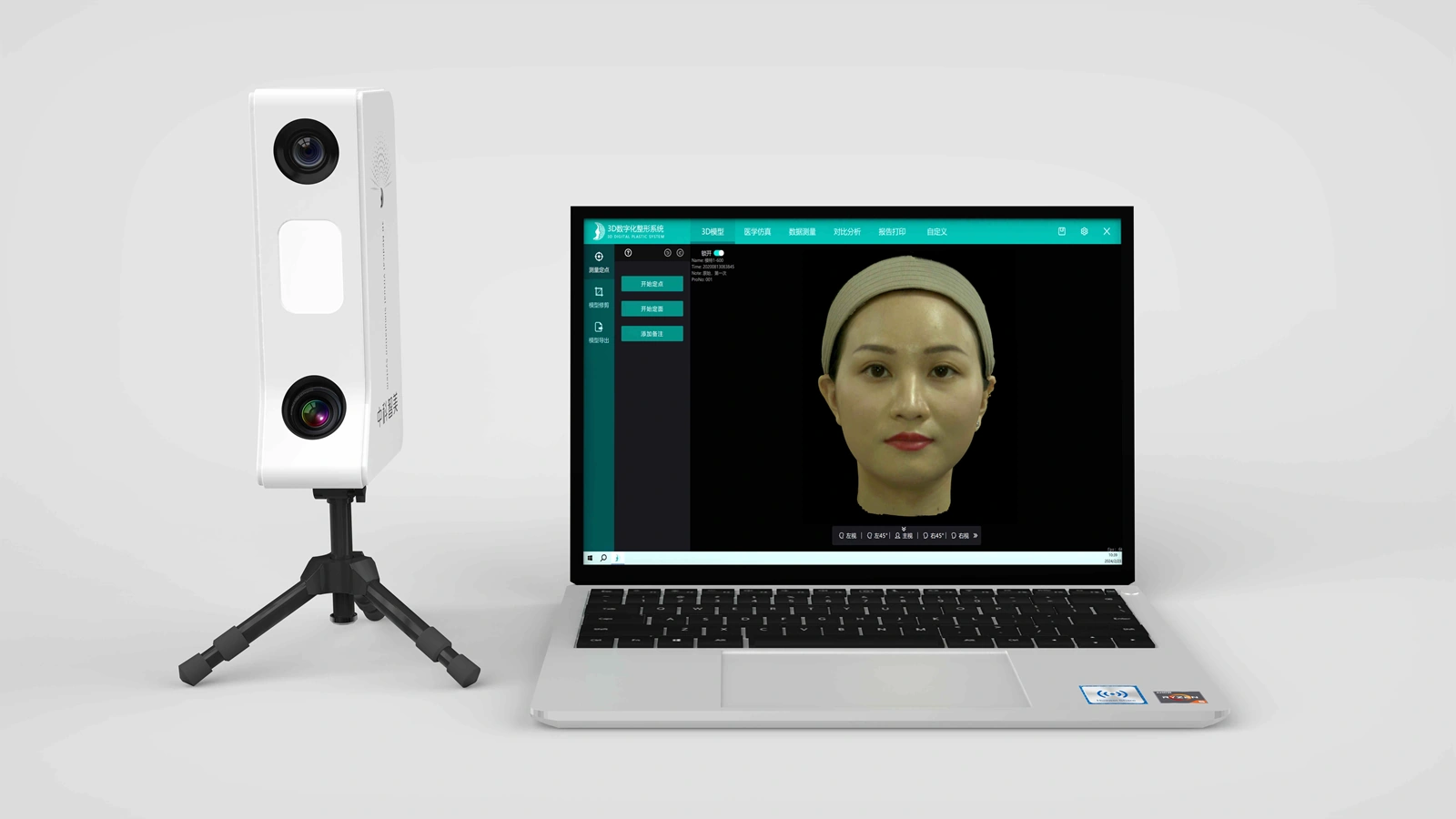
The hard part of a rhinoplasty consultation is that "a little bit" cannot be explained clearly. The MVS-M2N turns nasal form into comparable data, then exports the design as a printable model. Whether this workflow is worth using depends on how the clinic arranges capture, design and fabrication.
1. Where the MVS-M2N sits in the workflow
The MVS-M2N is the portable entry-level model for rhinoplasty: a 3-megapixel industrial camera, 3D measurement accuracy of ±0.2mm, repeatability of 0.02mm, a whole scan in under 9 seconds, a single scan in 0.3 seconds and a working distance of 500–700mm. The unit measures 135×80×260mm and can be moved between the consultation room, the doctor's office and the surgical area.
It exports OBJ, STL and PLY, and works with the 3D digital plastic surgery system for nasal quantification, simulation design and implant and guide export. When a higher pixel count or a higher accuracy tier is needed, look at models such as the MVS-M6 and MVS-P6.
Set the boundary first: ±0.2mm is intended for nasal form and plan discussions, and is not suited to extremely high-precision quantitative research; the specific accuracy specification is subject to the function table and test conditions.
2. Seven-point nasal quantification: turning "a little bit" into numbers
The software locks onto 7 key nasal points, compares nasal shape before and after surgery, and generates readable quantitative data. During a consultation, this data set can turn "the nasal dorsum is a little low" or "the tip is slightly off" into specific values and directions.
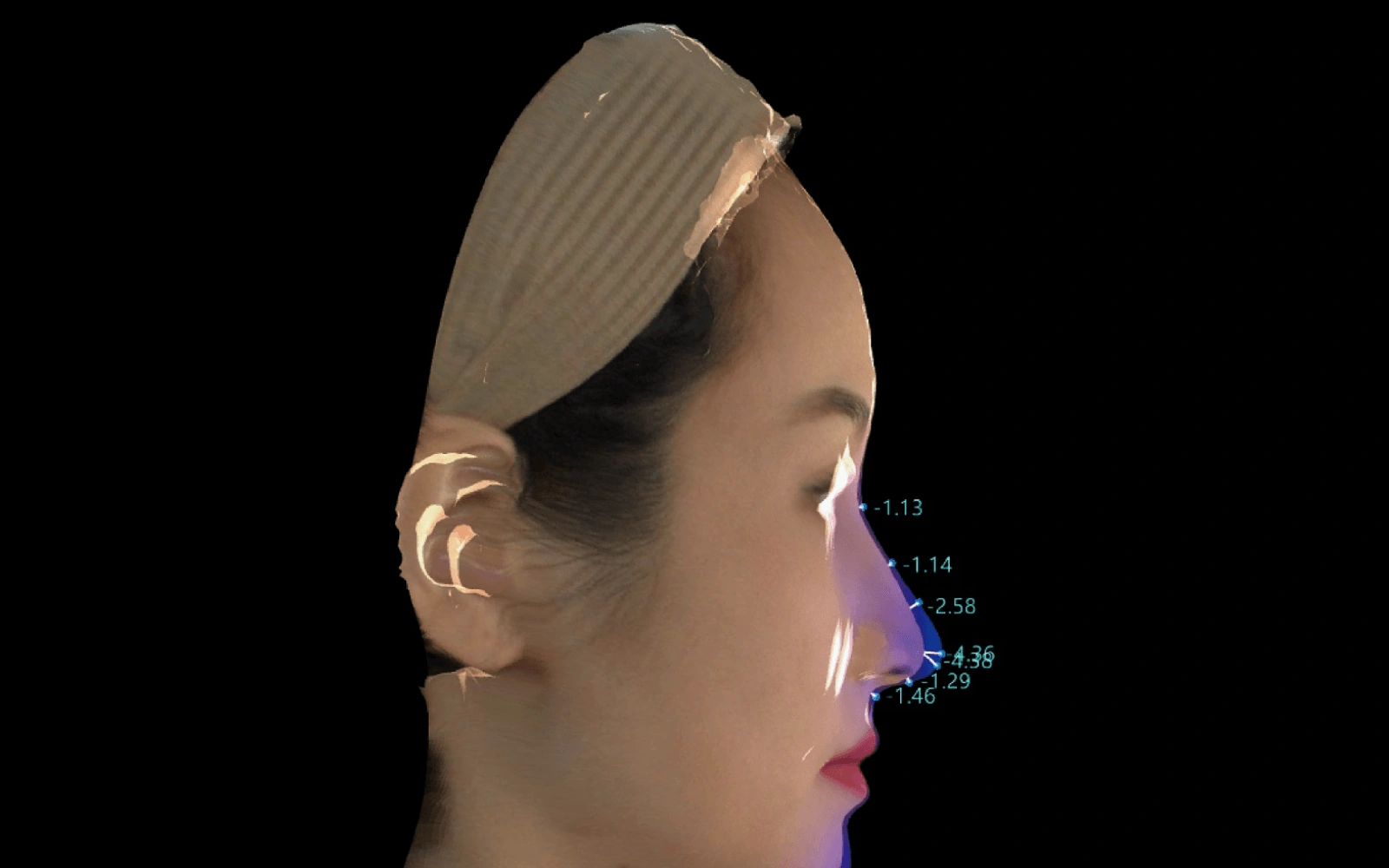
For the numbers to be comparable, capture conditions must be consistent: the same working distance, the same posture and the same expression, with makeup and lighting kept as consistent as possible. If conditions change, noise enters the difference.
Quantitative data is used for communication and records. It does not replace the doctor's judgement and does not constitute a commitment about postoperative form.
3. Implants and guides: from model to 3D printing
After the nasal simulation is completed on the 3D model, the software can generate a 3D nasal implant and a contour guide, and export a lateral model. The model goes to the fabricator for 3D printing, and the finished part can be compared with the design model during surgery.
The device's role is to turn the design into a file that can be manufactured; printing material, process and post-processing are decided by the fabricator. When communicating externally, it is safer to say "for intraoperative reference" rather than to promise a surgical outcome.
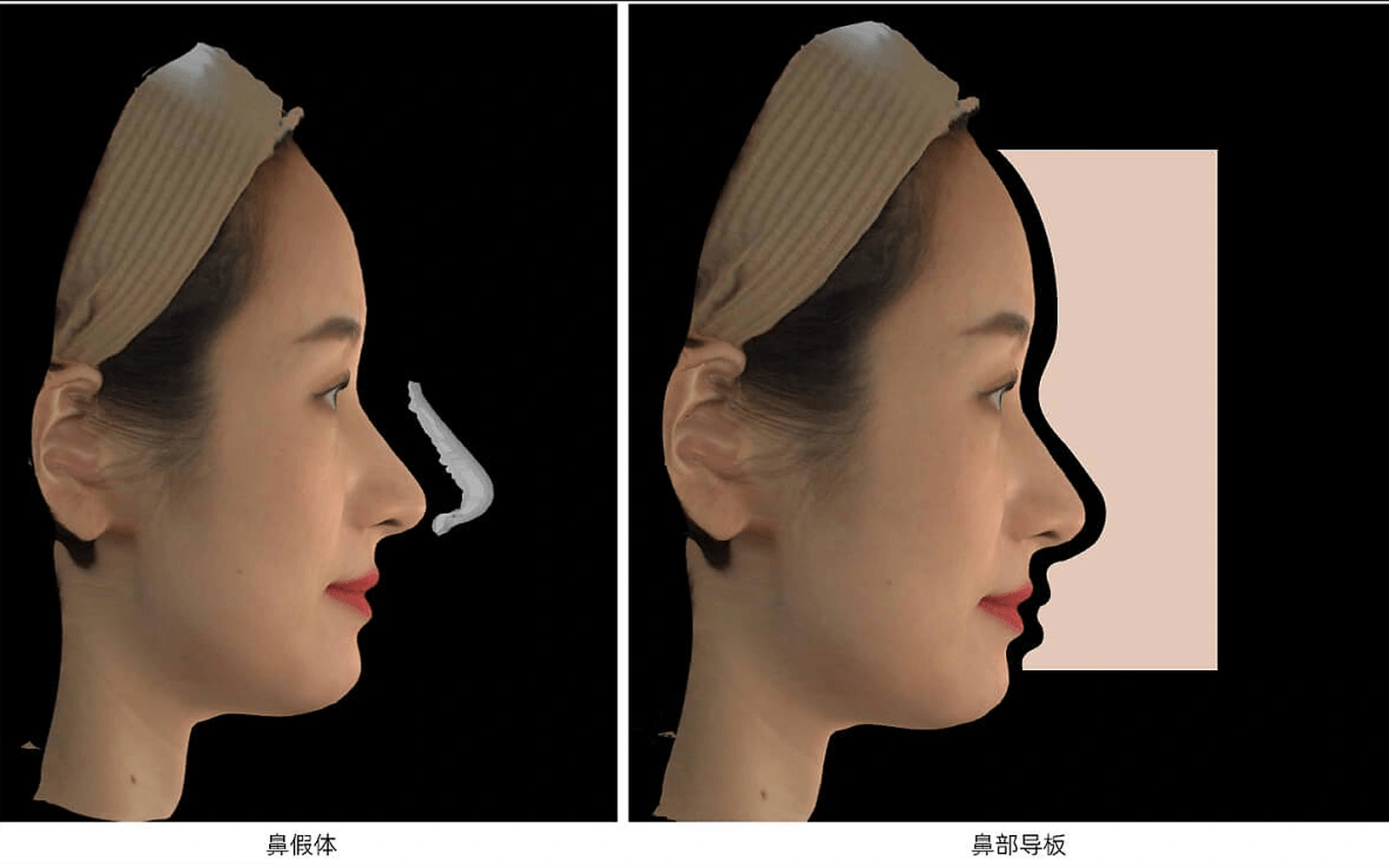
4. PEEK and print data: align three points with the fabricator first
Both the M2N and the M6 support implant and guide export and are compatible with PEEK 3D printing. What really affects delivery is often not the device, but the handover between files and process:
- Units and scale: an STL file carries no unit of its own, so confirm the millimeter convention before export.
- Model quality: whether watertightness, wall thickness and fine structures meet the printing requirements.
- Division of work: who designs the implant and the guide, who prints them and who handles post-processing.
A small trial print is recommended first, to confirm fit and assembly, before moving to the formal process.
5. Choosing between the M2N and the M6
| Model | Pixels | Form | 3D measurement accuracy | Best for |
|---|---|---|---|---|
| MVS-M2N | 3 megapixels | Portable | ±0.2mm | Nasal quantification, implant and guide export, mobile use |
| MVS-M6 | 3.9 megapixels | Desktop stand | ±0.2mm | Upgraded rhinoplasty model, with more detail and clarity |
Both support seven-point nasal quantification, implant and guide export and PEEK 3D printing; the differences are pixel count, form and use case. A clinic with fixed space that wants more detail can look at the M6; a setting that needs mobility and focuses on basic quantification can look at the M2N.
If full facial analysis, 60 indicators or higher-accuracy capture is also needed, move to another model on the same software platform rather than adding those requirements to the M2N.
6. Four checks before purchase and use
- On-site trial scan: use your own case to check completeness at the nasal tip, alae and columella.
- File handover: give the exported STL to the fabricator to open, and confirm units and structure.
- Training: online remote training, about 1 hour per session, booked in advance.
- After-sales: 1-year warranty on the whole unit; specific terms are subject to the contract.
Only when all four are cleared should you decide whether to start the procurement process.
Related pages: MVS-M2N, MVS-M6, MVS-P6, 3D digital plastic surgery system.
This article describes product functions and processes and does not constitute medical advice; specific parameters, modules and deliverables are subject to the product function table, the user manual and the contract.